

Natural Christmas activities for Early Years: a simple nature wreath

Updated: 2 days ago
By late November, the pressure to plan Christmas activities can start creeping in. There are cards to make, displays to prepare and plenty of ideas that seem to require a shopping trip before you can begin.
If you are looking for natural Christmas activities for Early Years, start with something small: a few suitable fallen materials, a clear space and time for children to explore. A simple nature wreath can become an invitation to arrange, compare, tell stories and make choices.
This version is a temporary arrangement on a table, tray or patch of ground. There is no glue, no wire and no finished wreath that every child has to reproduce. For children who do not celebrate Christmas, it can simply be a winter nature circle.
A simple Christmas nature craft to try
Allow around 15 to 30 minutes if a time guide helps, but let the children’s interest shape how long you stay. You can begin outdoors or bring a small collection inside. This works with a childminding group, nursery children or a family at home.
What you need
Gather a small selection of large, suitable fallen leaves, cones and short, smooth twigs. Add a shallow tray or clear tabletop. A large circle drawn on scrap paper can offer a starting point, but it is optional. You do not need to buy decorations.
An adult should check materials for sharp edges, splinters, mould and small detachable parts. Avoid unknown plants, berries and fungi. Choose materials for the children taking part, supervise closely and offer a different activity where mouthing makes loose natural materials unsuitable. Wash hands afterwards.
How to offer the nature wreath activity
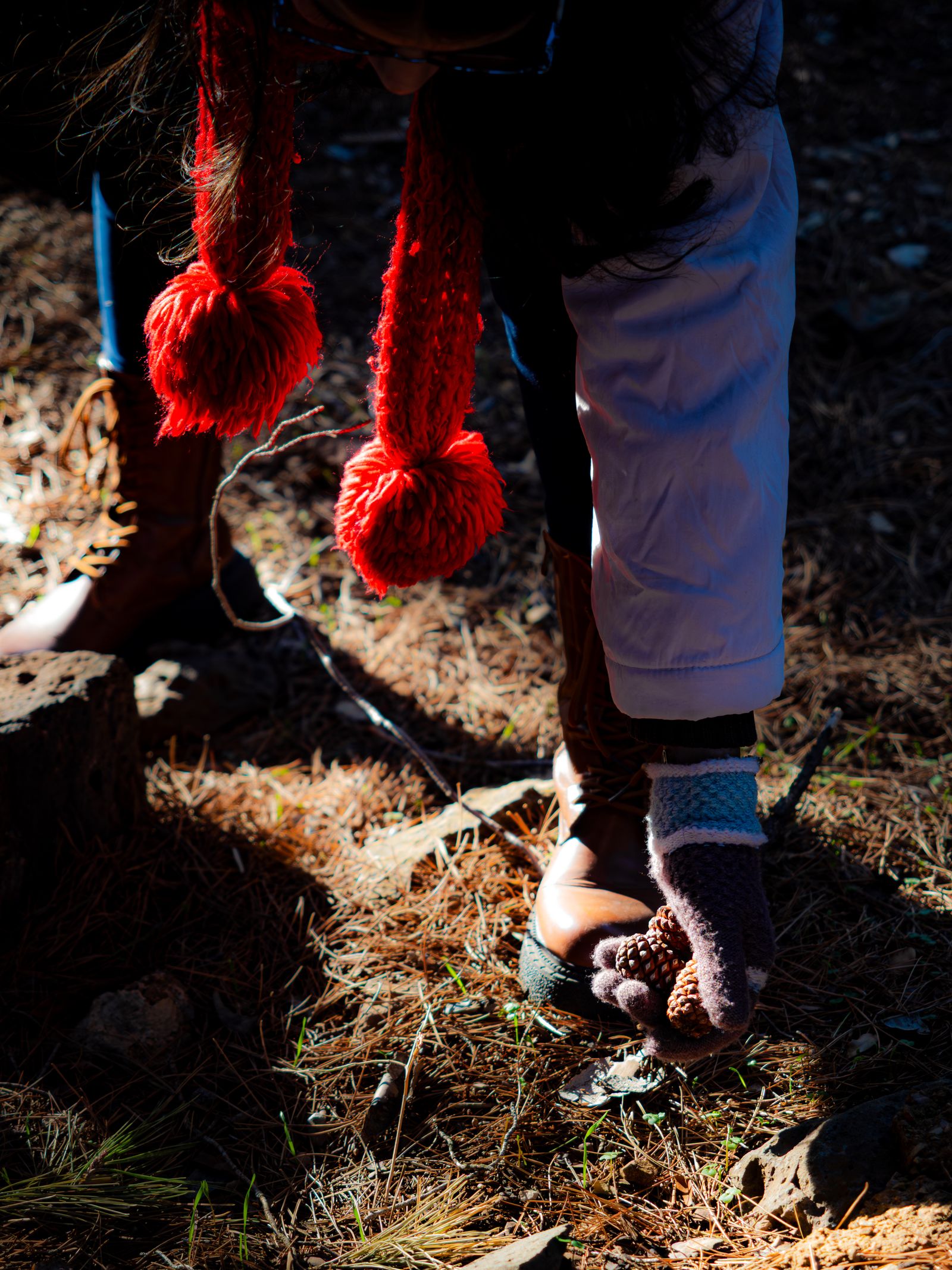
1. Explore a small collection. If you gather materials together, ask permission where needed and take only a few fallen pieces. Leave living plants, wildlife shelters and most cones, leaves and seeds where they are. Noticing something without collecting it is an option too.
2. Make space to look. Place the materials where children can reach them comfortably. Allow time to turn a cone, compare two leaves or move pieces between containers before suggesting a design.
3. Offer the circle as a possibility. You might say, “I wonder what we could make with these?” If useful, arrange a few pieces in a curve. Avoid completing an adult example for everyone to copy.
4. Follow their choices. One child may make a circle; another may line up cones, build a tiny shelter or carry leaves to a different place. Notice what interests them and decide whether another material, more space or simply more time would help.
5. Decide what happens next together. Children might photograph their arrangement, describe it, change it or take it apart. Return clean, untreated materials to a suitable outdoor place where permitted, or compost them appropriately. Keep paper and other added materials separate.
Notice the learning within the making
There may be opportunities to compare size, explore position, repeat a pattern or negotiate space with someone else. A child might invent a story about the circle or communicate a preference through pointing, movement or choosing an object.
Those possibilities do not mean every child must practise the same skill. Try describing what you actually see: “You put the smallest leaf inside that gap.” Pause before adding a question. Children do not need to explain every decision for the experience to have value.
Through The Wild Lens™, you can Notice what happens, Wonder about possible interests or barriers, Respond with a small adjustment and Reflect on whether it helped. Repeatedly moving cones might be worth exploring, but one moment alone does not establish a play schema.
Make participation flexible
Offer a seated space, an accessible tray or fewer materials at a time. A child can direct an adult, choose from photographs or use a scoop instead of touching a texture. Watching is a valid way to begin. Check scents and textures with the children rather than assuming natural materials will feel pleasant to everyone.
For older primary children, an optional extension could be creating and explaining a repeating pattern, comparing different ways to make a circle or designing an arrangement that can be dismantled and reused.
More nature-inspired Christmas ideas
If you would like more seasonal inspiration, our A Natural Christmas Study brings together over 18 activities, including crafting, baking and shared seasonal traditions. Choose what fits your children and your setting.
For a flexible collection of December invitations, A Christmas Advent offers 24 nature-inspired ideas that you can dip into at your own pace.
A natural Christmas activity can be a small shared moment. The children’s choices, conversations and discoveries can shape what it becomes.
Photo: Georgia de Lotz on Unsplash. Homemade wreath inspiration; the activity above uses a simpler, temporary circle of loose natural materials.

Comments